
In a world that’s becoming increasingly interconnected and diverse, the integration of multilingual learning programs at Brilla Schools Network is not just a choice or a mandate but a crucial step in shaping the future of our upcoming generation.
We define a multilingual learner – as a student who is committed to mastering English while still holding dear to their primary language. At Brilla Schools Network, we’re fortunate to have 27% of our student body comprised of such extraordinary MLLs, each one a testament to the beauty of diversity and the strength it brings to our community.
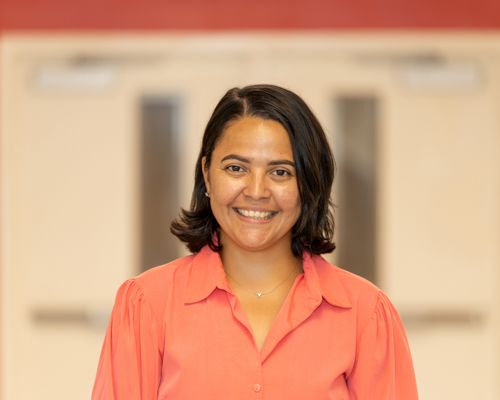
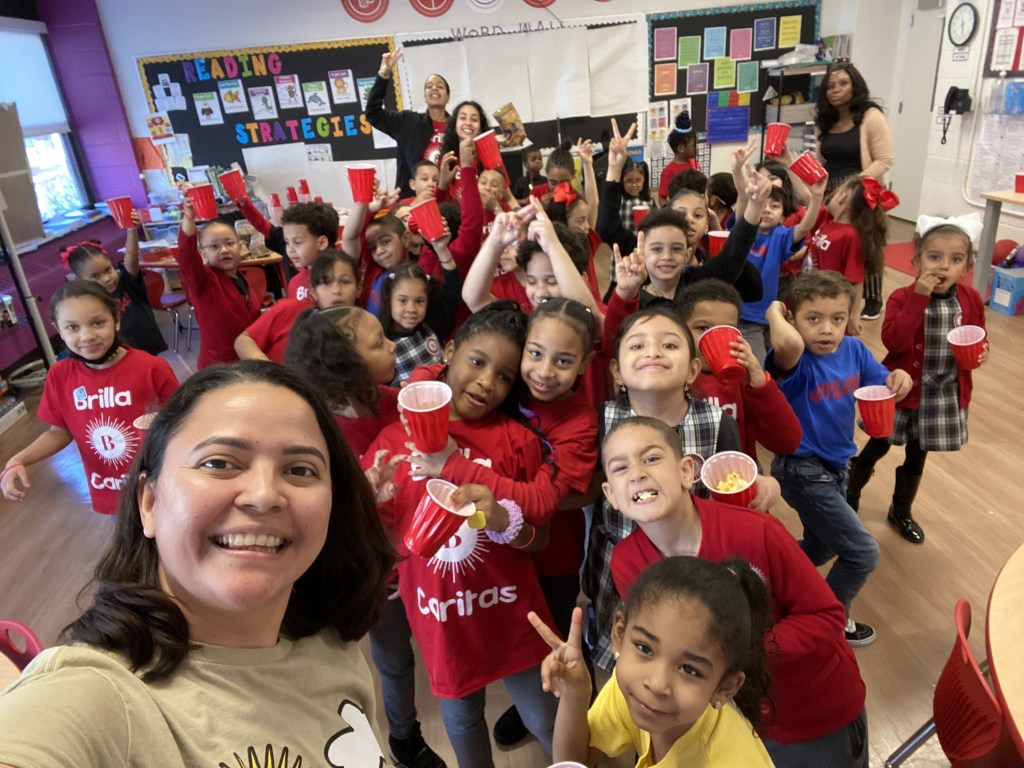
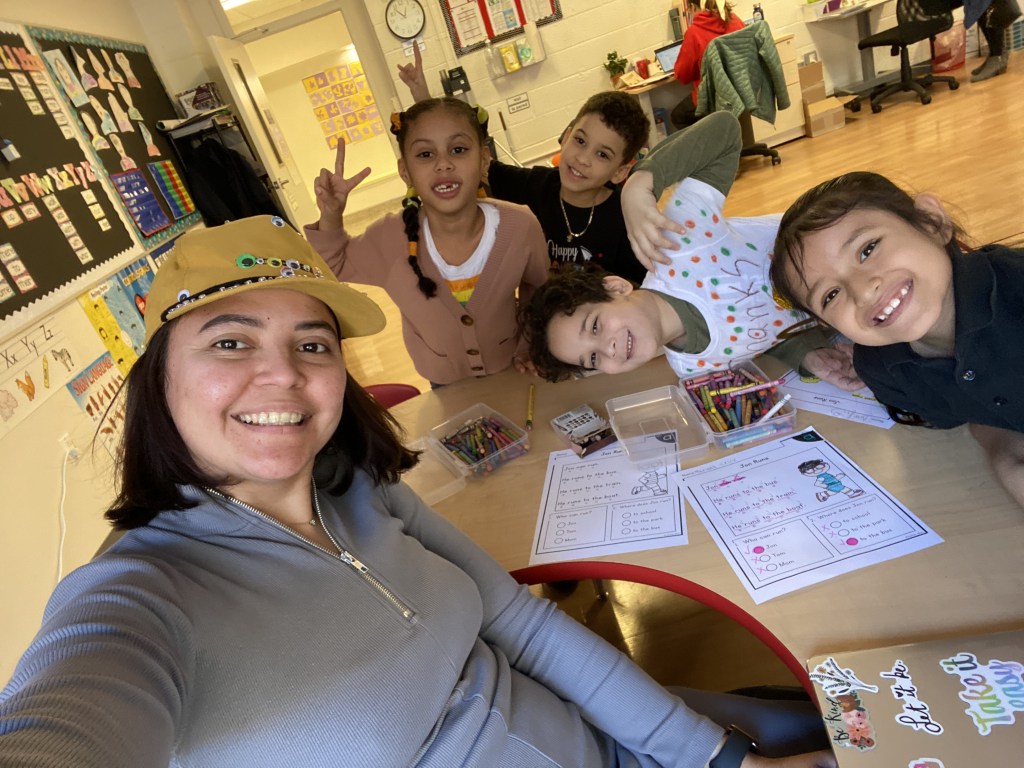
Now we direct our gaze to the remarkable Brilla Caritas, a beacon of inspiration where an astonishing 44% of the student population proudly stands as MLLs. As our school with the highest number of MLL students, they are setting the standard as a nurturer of dreams and a cultivator of triumphs for our MLL community. At its helm, MLL specialist Mrs. Lesbia Sierra is the visionary whose commitment to excellence is matched only by her dedication to the Brilla Mission. Through her leadership, Brilla Caritas not only champions academic excellence but also sets a profound example of how to embrace diversity and empower MLL students to thrive.
At the heart of this transformation is the customization of support, an approach that recognizes the unique strengths and aspirations of each MLL scholar. This personalized approach not only fosters English language mastery but also nurtures a sense of belonging, reminding every student that their culture and voice matter.
In a heartfelt conversation with Mrs. Sierra, we uncovered the layers of dedication and passion that define the comprehensive program at Caritas. Her words radiated with warmth and determination, a testament to the profound impact she’s had on our MLL scholars. She embodies the essence of Brilla’s values – justice and wisdom – as she tirelessly works to create a space where every student feels valued, understood, and empowered.
What led you to do this work, and why do you feel passionate about MLLs?
I was a multilingual learner myself. When I moved here at the age of 14, I didn’t know any English. I had to learn a new language, adjust to a new culture, and adapt to a new country all at the same time. Now, I am fluent in two languages and am learning a third one, and work to support other multilingual learners. My experiences inspired me to become a teacher and work with students who face the same challenges I faced. I taught Spanish to 1st, 2nd, and 4th graders before becoming a multilingual learner specialist. Working with children who remind me of my younger self is incredibly fulfilling, and I am passionate about advocating for them and giving back to my community.
What’s your experience at Brilla? Why are you at Brilla?
My experience at this school has been amazing. The school culture is one of the best I have ever encountered. I have developed a special connection with the students and their families. As an MLL specialist, I was responsible for 122 students and had to make connections with their parents. It was inspiring to see so many parents engaged and active in the school community. The school does an excellent job of involving parents and making them feel part of the community. Although the MLL program is new, I am confident that it is on the trajectory of excellence due to the support of the incredible Student Services Team we have at Brilla.
How is the MLL program at Brilla different from others?
Brilla has pioneered a distinctive approach by establishing a dedicated department specifically tailored to MLL (Multilingual Language Learner) students. In contrast to conventional practices observed in other schools, where regular teachers or operation teams are responsible for evaluating incoming MLL students, Brilla’s approach avoids the pitfalls of making inaccurate classifications of students. This proactive stance is crucial, as misclassifications at this stage can have cascading repercussions, resulting in students receiving inadequate or even no support.
An illustration of this predicament is the tendency to label students as MLL solely based on their proficiency in a second language, potentially disregarding the fact that many of them are already bilingual. Brilla’s distinctive advantage lies in hiring MLL specialists, like myself, to engage in comprehensive interviews with the scholars before they start school. MLL specialists conduct a rigorous assessment protocol to safeguard against misclassifications, ensuring that multilingual learners are accurately and appropriately processed within the DOE systems.
Furthermore, in other schools, the support offered to MLL students is often confined to bilingual teachers who may need more training, certification, or capacity to address the diverse needs of each MLL student holistically. At Brilla Caritas, the presence of dedicated MLL specialists guarantees that these students receive tailored assistance that aligns with their unique requirements. This approach ensures accurate classification and fosters an environment where MLLs can thrive and flourish.
What do you think is needed to improve or change the game?
In my opinion, the classification process needs improvement. Many educational institutions are not following appropriate procedures. Ideally, only certified “dual language” individuals should classify students and conduct interviews. For example, Brilla has customized questions depending on the student’s grade level. Unfortunately, last year, some newly enrolled MLLs did not need to enroll in the program. To address this issue, I advocated for MLL specialists to lead the interview process, and as a result, I conducted all the interviews myself to ensure accurate and fair student classification.
What are some of the changes that Caritas has made?
The old process for intaking MLL scholars required the Operations team to identify the kids and input language classification codes in ATS, the Department of Education database. We had some kids with the wrong language, which is common in many schools because the people handling the process are not experts. At Brilla, we completely changed the process. Instead of Operations classifying students in the system, the MLL specialist conducts the Home Language Survey with the parents and the Home Language Interview with the students. The MLL Specialist provides the Operations Team with the student language codes for language assignments for them to input in ATS. This change has produced an increase in accurate coding, which in turn helps us serve our children better. Also, there was a change to the testing procedures for MLL scholars. MLL specialists now have input into the testing plan and the scheduling based on what students need. The change in testing procedures has helped – we hope to see the positive outcomes in the NYSESLAT test scores from last year in September.
We’ve also made changes to our staff handbook to provide role clarity and specify what our job is and what the expectations are for all MLL specialists. Our Director of Student Services asked for our feedback and input, which resulted in the addition of intentional language and investment from the MLL team.
Lastly, our training will be more directed to our role. We often used to be in professional development sessions that had little to do with our role; now, the plan is to have more specialized development sessions for MLL staff. This change is massive and will improve our ability to serve the children with excellence.
Have you ever been inspired by one of your students?
Absolutely! I have countless stories of inspiring moments with my students, but one that stands out is with a 1st grader who had just arrived in the country and didn’t speak any English. Unfortunately, she was mislabeled as a non-MLL student, which prevented her from receiving the necessary services. We started pulling her out of class to provide her with support before it was approved, as we knew it was a misidentification and the process to change the language on ATS can take a long time. At first, she was sad and worried about not learning anything. The student was usually happy and bright, but this situation made her feel down. I reassured her that everything would be okay and we did our best to support her. Despite feeling unsure of herself and her abilities, she learned the ABCs, and we even recorded her progress for her mom, who was always supportive and willing to support her at home with any homework or activities. By the end of the year, she was having full conversations in English and during a community circle was even sharing about her special friend in front of the whole class. It was incredible to see her progress and the pride she felt in her newfound language skills. It’s moments like these that make me believe in the program and the impact it can have on all our students’ lives.
To sum up, the success of the MLL program at Brilla Caritas is attributed to the school’s commitment to providing specialized support for multilingual learners, the dedicated leadership of Mrs. Lesbia Sierra, and her personal connection to the program’s mission. By prioritizing accurate classification, involving MLL specialists in decision-making, and offering targeted training, Brilla Caritas has created an environment where MLL students can thrive and achieve remarkable language development milestones.
As Brilla continues to light the path for educational excellence in the Bronx, its multi-language learner programs stand as a testament to the school’s vision of nurturing not only educated minds but also compassionate hearts.
 Brilla Public Charter Schools